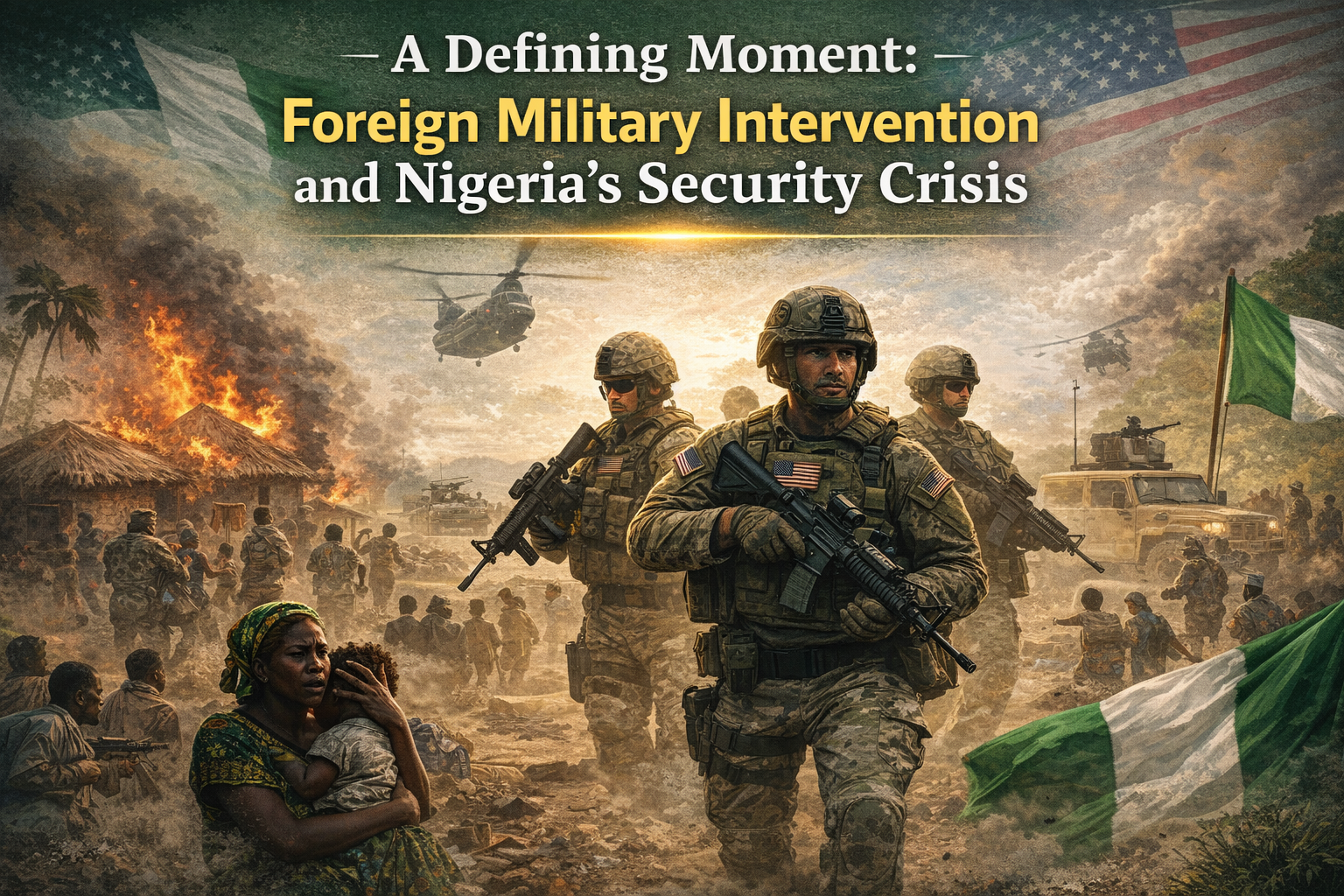
The arrival of United States troops into northern Nigeria has expectedly sparked lively debate. Only half of an expected limited non-combat deployment have landed in Nigeria so far but it does signal a very important new dawn in what PSJUK has been advocating for since we began to mobilise the Nigerian diaspora in the UK along with friends of Nigeria to advocate for peace and social justice in a nation who’s true potential was itself being held captive.
For some, this arrival of US boots on Nigerian soil raises sovereignty concerns. For others, it signals overdue international attention into an existential crisis that has been neither acknowledged nor addressed for far too long.
Nigeria’s insecurity is indeed multi-layered and multi-faceted, which is what makes it complex; it is very much the case that Christian persecution is a part of that complex cocktail. For years, Christian communities in parts of Nigeria — particularly in the Middle Belt — have faced targeted and repeated violence. Churches have been attacked. Clergy abducted. Worshippers killed or abducted during services. Farming communities in Plateau, Benue, and Southern Kaduna are repeatedly devastated. Yet authorities simply tagged it as climate-change-induced clashes between farmers and herders. It is not good enough for others to sit in comfortable abodes and deny the reality that victims are experiencing firsthand. Before geopolitics and pundit analysis, there is a human reality.
It is not controversial to say that Christians in certain regions of Nigeria have been disproportionately affected by violence.
At the same time, insecurity has harmed Muslim communities too. All non-extremist, peace-loving and tolerant Muslims as well as any other 'infidels', are also subject to these deadly attacks. They are persecuted as well. The deeper issue is not only religious persecution — it is weak security governance and a dangerous culture of impunity, which leads to accusations of infiltration and complicity. This is both a religious freedom crisis and a broader rule-of-law failure.
When the State Fails
If a government cannot guarantee the basic right to life and security, it leaves space for external actors – either to attack or protect….
If your home is on fire, you do not debate the nationality of the firefighter. You just want and need the fire put out.
That is the emotional truth for many families in rural communities who feel abandoned. The grief is not theoretical. It is lived. It is buried in shallow graves. It is visible in internally displaced persons (IDP) camps right across northern Nigeria and the Middle Belt.
The uncomfortable question Nigerians must now confront is this: how did a capable giant nation of over 200 million people reach a point where foreign military presence becomes a subject of relief rather than resistance?
This should indeed be a moment of national reflection.
There must be a full national investigation into perpetrators, funders, collaborators and enablers of violence. Prosecutions must follow. Impunity must end. It is troubling that in some instances we have seen stronger sanctions rhetoric and international pressure from Washington than decisive, transparent accountability at home. The UK, on the other hand, is unfortunately ‘otherwise engaged’ – We pray that this changes soon with an upcoming ‘State visit for Peace in all states of Nigeria’, as PSJUK is advocating for.
A Positive Step — If Done Right
This deployment of American troops to Nigeria can be a positive step forward — if it leads to measurable protection for vulnerable communities.
Military support can stabilise situations temporarily. It can strengthen intelligence architecture. It can improve targeting and reduce civilian harm. It can enhance rapid response.
But military assistance cannot replace institutional reform. It cannot substitute for political accountability. And it cannot heal communal fractures without justice.
This is an opportunity for the United States to be on the right side of history — not by grandstanding, but by partnering responsibly. We have seen in other regions how poorly framed interventions can worsen insecurity. That must not happen here.
Beyond Political Theatre
There are also legitimate questions about political framing. It is welcome when global leaders acknowledge religious persecution. Christians in Nigeria do need stronger protection and equal opportunities everywhere.
But concern must translate into policy. Policy must translate into measurable outcomes.
Oversimplifying Nigeria’s crisis into a single narrative — whether “terrorism,” “farmer-herder conflict,” or “religious war” — is dangerous. The reality is layered: insurgency, banditry, transnational jihadist networks, governance failures, and community tensions.
What all Nigerians want is not political theatre. They want protection. They want justice. They want an end to impunity.
The Bottom Line
The presence of foreign troops will be good if it leads to measurable protection for vulnerable communities. It will not be good if it becomes symbolic, politicised, or detached from structural reform.
Protection must be practical, not political.
Credit: Ayo Adedoyin, CEO, PSJUK
International Organisation for Peace Building & Social Justice (PSJ UK) is a UK-based advocacy movement mobilising the Nigerian diaspora and global partners to confront violence, persecution, and systemic injustice in Nigeria. Through research, media advocacy, community action, and strategic engagement with policymakers, PSJ UK amplifies the voices of victims and drives coordinated action for peace, justice, and accountability.
