She walked into our office, asking to do chores in exchange for a small payment or simply for food. She was not in school. Hunger had become her routine companion, so she roamed the streets, moving from houses to offices, asking if there was anything she could do just so she could eat. Life had already been difficult for her, yet she carried an even heavier burden without knowing it; she was pregnant. Some people in church avoided her family entirely. She was just twelve years old.
In May 2021, a disturbing case of prolonged sexual abuse involving eleven teenage girls aged between nine and twelve was reported in the Abattoir community of Jos, Plateau State. The abuse was allegedly committed by a single perpetrator, a foreign resident within the community. Eventually, the twelve-year-old girl who came to our office was one of those victims.
The police initiated an investigation. Soon after, concerns began to surface about how the matter was being handled. The Plateau State chapters of the National Association of Women Journalists and the International Federation of Women Lawyers stepped in, calling for a thorough investigation and insisting that justice must be pursued fairly and transparently.
Yet what followed reflected a familiar pattern in Nigeria’s justice system: fragmented legal processes, prolonged delays, and lingering uncertainty. “Justice delayed is justice denied” is not just a legal phrase. In Nigeria, it has become the lived reality of many survivors of gender-based violence.
Sexual violence remains alarmingly common. Nigeria’s Demographic and Health Survey indicates that nearly thirty percent of women between the ages of fifteen and forty-nine have experienced physical violence, while about nine percent report having experienced sexual violence. These figures likely represent only a fraction of the reality, because fear, stigma, and distrust in institutions prevent many survivors from reporting their experiences.
Globally, the World Health Organization estimates that one in three women will experience physical or sexual violence in their lifetime. When Nigeria is situated within that broader global context, it becomes clear that what we face is not a collection of isolated incidents but a deeper structural challenge.
In recent years, social media in Nigeria has repeatedly amplified these concerns. Stories of rape dominate timelines for days. Hashtag trend. Outrage builds. Young people demand accountability. Parents express fear and frustration. Universities, rural communities, urban neighborhoods, and even religious spaces have found themselves at the center of these difficult conversations.
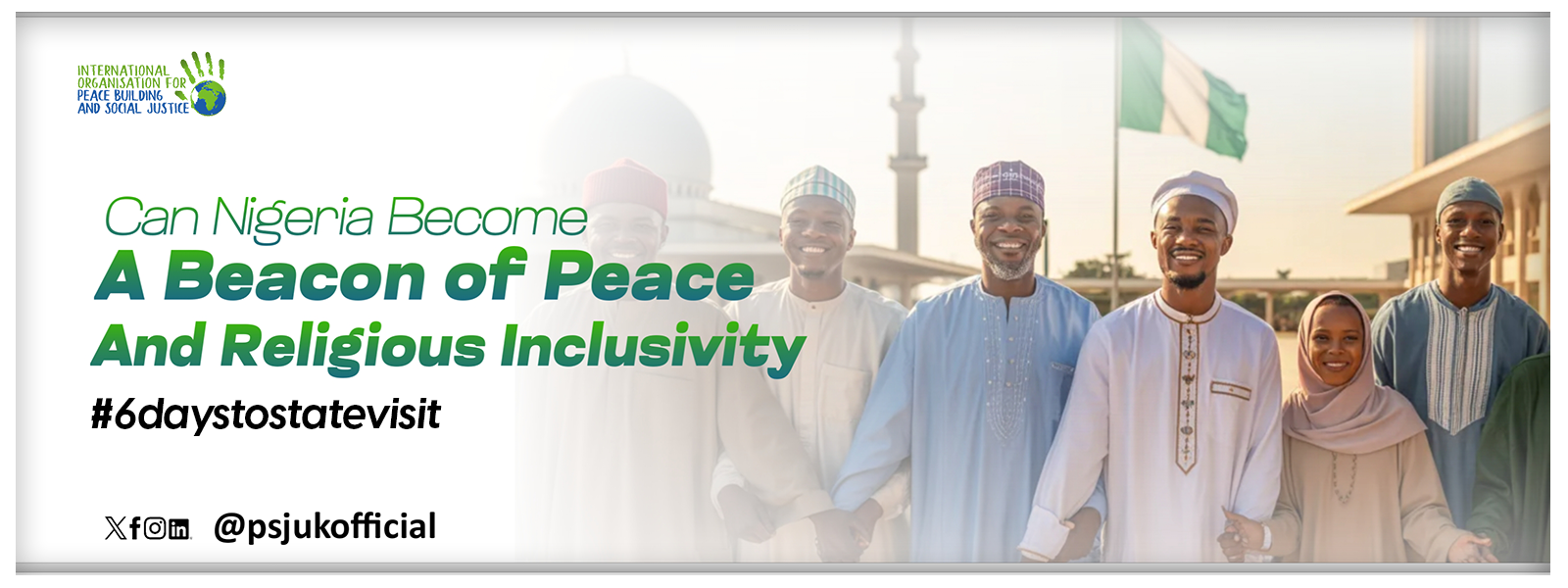
The concern is not exaggerated. It reflects a society increasingly worried that perpetrators are not consistently held accountable. This reality raises an important question about Nigeria’s aspiration to become a beacon of peace and religious diversity on the African continent.
Nigeria is a nation of extraordinary diversity. It is home to over 250 ethnic groups and multiple religious traditions living side by side. Historically, Nigeria has also played a significant role in regional peacekeeping efforts across Africa and has often projected itself as a stabilizing force on the continent. But the credibility of that position depends not only on external diplomacy, but also on how justice, protection, and dignity are secured within its own communities.
When violence against the vulnerable persists without accountability, the idea of peace becomes fragile. When victims are stigmatized by their communities or rejected in places that should offer spiritual refuge, the promise of religious coexistence begins to lose meaning.
Nigeria is not without legal frameworks designed to address these concerns. The Violence Against Persons (Prohibition) Act was enacted to close many of the gaps that previously existed in law. It expanded the definition of rape, recognized psychological violence, and introduced stronger penalties, including life imprisonment in severe cases. The intention behind the legislation was clear: to protect survivors, remove loopholes, and ensure that prosecution becomes possible and effective.
Yet too often the law appears stronger on paper than in practice. Investigations are sometimes incomplete, and evidence is poorly managed. Limited forensic capacity slows legal processes that should be swift. Survivors are required to recount painful experiences repeatedly while their families face stigma within their communities. Witnesses become discouraged, and in many cases, they quietly withdraw. Public attention gradually shifts to a new issue trending online. Momentum fades. The system slowly exhausts those seeking justice while perpetrators move forward without consequence.
The delay ends up serving offenders rather than victims.
In the Jos case, the human consequences were painfully visible. The affected girls reportedly experienced deep sadness, shame, and withdrawal from activities they once enjoyed. Some faced ridicule and stigma within their schools and neighborhoods. Others were alienated within religious communities where compassion should have prevailed.
Trauma layered itself on top of social rejection.
According to the World Health Organization, childhood sexual violence can lead to long-term emotional disorders, depression, substance abuse, and risky behavior later in life if not addressed properly. Delayed justice, therefore, does more than postpone accountability; it deepens the harm suffered by survivors. When a child sees that the person who harmed her remains free, a dangerous message is silently communicated: that her pain can wait.
Many girls across Nigeria are quietly losing hope in the process.
Perpetrators often escape consequences for several reasons. Investigations are poorly resourced. Survivors lack sustained legal and psychosocial support. Families fear public shame more than they trust public systems. Poverty makes it difficult to sustain long legal battles. In some communities, harmful cultural attitudes continue to shift blame toward victims instead of offenders.
Impunity thrives in such environments. When it is left unchallenged, it spreads, signaling that consequences are negotiable.
As someone who works closely with communities, I have seen how quickly trust erodes when justice feels slow or selective. When people believe reporting abuse will not lead to accountability, silence grows. And silence creates the very conditions in which predators operate with greater confidence. Nigeria has the laws. Civil society organisations continue to advocate. Many citizens have raised their voices repeatedly. Yet the challenge remains consistent enforcement.
This conversation becomes even more significant as Nigeria prepares for another moment of international engagement, the forthcoming state visit of the Nigerian government to the United Kingdom. Such diplomatic encounters are often framed around trade, investment, and strategic partnerships. These are important priorities. But the deeper strength of a nation lies in the safety of its people and the credibility of its justice system.
If Nigeria hopes to be seen as a beacon for peace and religious diversity in Africa, the protection of its most vulnerable citizens must be part of that narrative. Peace is not merely the absence of armed conflict. It is the presence of justice, accountability, and dignity within communities. Religious diversity cannot thrive where stigma replaces compassion or where victims are isolated instead of supported.
Nigeria has the potential to lead Africa in building communities where diversity is not only tolerated but protected, where faith traditions promote healing rather than exclusion, and where justice systems move swiftly to defend the vulnerable. But achieving that vision requires honest reflection and deliberate action.
The difficult questions remain.
If justice was truly served in cases like the one in Jos, what happened to the perpetrator? What became of other cases that once filled our timelines? Why did they fade into silence? Why do these issues trend briefly and then disappear from public attention?
Perhaps the most troubling question of all is this: why are we slowly becoming tired of demanding justice?
Until we confront these questions with sincerity, justice delayed will continue to mean justice denied.
As Martin Luther King Jr. famously reminded the world, “injustice anywhere is a threat to justice everywhere.” If Nigeria is to become a beacon of peace and religious diversity, not only in words but in practice, then justice must be pursued with urgency and consistency. Communities, institutions, faith leaders, civil society, and government must work together to ensure that laws are enforced and survivors are protected.
Only then can Nigeria truly sustain the peace it seeks to represent, both within its borders and across the African continent.
Deborah N. Deshi
