In the last quarter of 2025, Nigeria faced credible threats of American intervention over allegations of Christian persecution. The Federal Government reached for its diplomatic arsenal and found the storeroom empty, exposing Nigeria's acute diplomatic capacity crunch. The Ministry of Foreign Affairs, once home to titans like Joe Garba, Bolaji Akinyemi, Joy Ogwu, Ike Nwachukwu and Joe Keshi could not field a credible team. In the scramble, a ranking senator, Ali Ndume, publicly proposed recruiting Chief Emeka Anyaoku, 93, and Professor Akinyemi, 84, Babagana Kingibe, 80, from retirement. In the end, the National Security Adviser, a man with near-zero diplomatic experience, led the delegation to Washington.
Beyond the embarrassment of the moment, the episode demonstrated the visible collapse of institutional capacity, decades in the making. Ministries and agencies that once commanded respect across Africa and beyond now operate as employment offices for the children of the powerful. Nepotism, woven brazenly into recruitment and promotion since 1999, has hollowed out the civil service from within, leaving Nigeria unable to project power when it matters.
The practice may have begun under President Olusegun Obasanjo when he systematically appointed sons and daughters of First Republic politicians and friends as Special Assistants. These hires brought education and pedigree, but the real enduring problem was fast-tracking careers and prioritising lineage over the long apprenticeships that built earlier generations of public servants. Other presidents who followed, Yar'Adua, Jonathan, Buhari, and Tinubu refined rather than rejected the model. Sons and daughters of the powerful entered civil service through preferential back doors, opened by influence. Selective patronage hardened into structural entitlement.
Studies on Nigeria's public sector document the mechanisms of decay. The harm is not abstract. Research on nepotism and productivity among civil servants finds that political and family-based hiring produces "a significant number of under-qualified personnel" and directly undermines performance. A 2024 survey revealed that 44% of federal jobs are now secured through nepotism, bribery, or both, effectively locking out competent applicants and embedding incompetence across ministries. The NNPC has often been cited as a textbook case of elite capture, where recruitment bypasses exams and merit in favour of "connections or specific agreements". The result: bloated payrolls, ghost workers, and agencies that serve patronage networks rather than the public.

The Central Bank saga of 2024 illustrated the operational cost. When Governor Yemi Cardoso ordered the decongestion of an overcrowded, unsafe Abuja headquarters, where 4,300 staff crammed into space designed for 2,700, some 1,533 employees resisted redeployment. The bank cited structural hazards and efficiency, critics framed it as northern marginalisation. What went largely unreported was the culture beneath the resistance: well-connected elite staff who considered themselves untouchable, insulated by family name from the indignities of reassignment. Management pressed ahead, but the episode revealed a public service in which discipline is optional for the well-born and necessary reforms trigger political crises rather than compliance.
Nowhere is the damage clearer than in the Foreign Ministry. Analysts trace its decline to the 1980s, when the Federal Civil Service Commission began recruiting for the ministry without its input, flooding the service with "favoured sons and daughters of politically connected big men". Merit gave way to quota and federal character manipulations. A ten-year recruitment freeze followed, but by then the rot had set in.
Where Joe Garba, Ike Nwachukwu and Bolaji Akinyemi once led a trained and purposeful foreign service, steeped in anti-apartheid diplomacy and Concert of Medium Powers innovation, today's ministry is "filled up with mediocre persons" who secured posts through patronage rather than rigorous selection. The result? Missions operate below expectation; some are international embarrassments. When Trump threatened Nigeria, the ministry had no ambassador in Washington, no permanent representative at the UN, and no deep bench of career diplomats to deploy. The elders were summoned because the system, corroded by decades of nepotistic appointments, had produced no successors.
The lesson is systemic. Nepotism does not merely favour the undeserving; it actively destroys the ethos that sustains institutions. When elite children enter on family name rather than competitive exams, when they resist postings that inconvenience them, when they rise regardless of performance, the civil service ceases to be a meritocracy and becomes a patronage network. Competent officers leave or disengage. Standards erode. The nation loses not only talent but the institutional memory and discipline required to navigate complex international crises.
Nigeria can no longer afford this drift. The government must immediately commission an independent audit of recruitment practices across all ministries and agencies, with particular focus on the Foreign Service, CBN, NNPC, Customs, and key economic ministries. Appointments found to violate merit principles should be rescinded. The Foreign Ministry must return to ministry-led recruitment with transparent, competitive exams and rigorous training to restore the standards of the Garba, Akinyemi, and Ike Nwachukwu eras. When Federal character is applied at entry, it must not become a back-door for the unqualified. Most urgently, a new cadre of career diplomats must be recruited and trained now, before the next crisis finds Nigeria again begging octogenarians to salvage what nepotism has destroyed.
A systemic rot is invisible until the moment it collapses. Nigeria has seen that moment. The charge now is to discontinue the quiet demolition from within and find ways to rebuild on merit.
About the Author
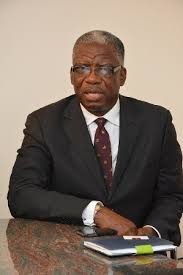
Dr. Richard Ikiebe is a scholar specialising in Contemporary Media Leadership and History. He is an Adjunct Senior Fellow at the School of Media and Communication, Pan-Atlantic University, Lagos. He also serves as Chairman of the BusinessDay Board of Directors and Co-convener of the YSOT.
