“What good is diplomacy if it cannot save lives?” That question increasingly shadows Nigeria’s place in global politics.
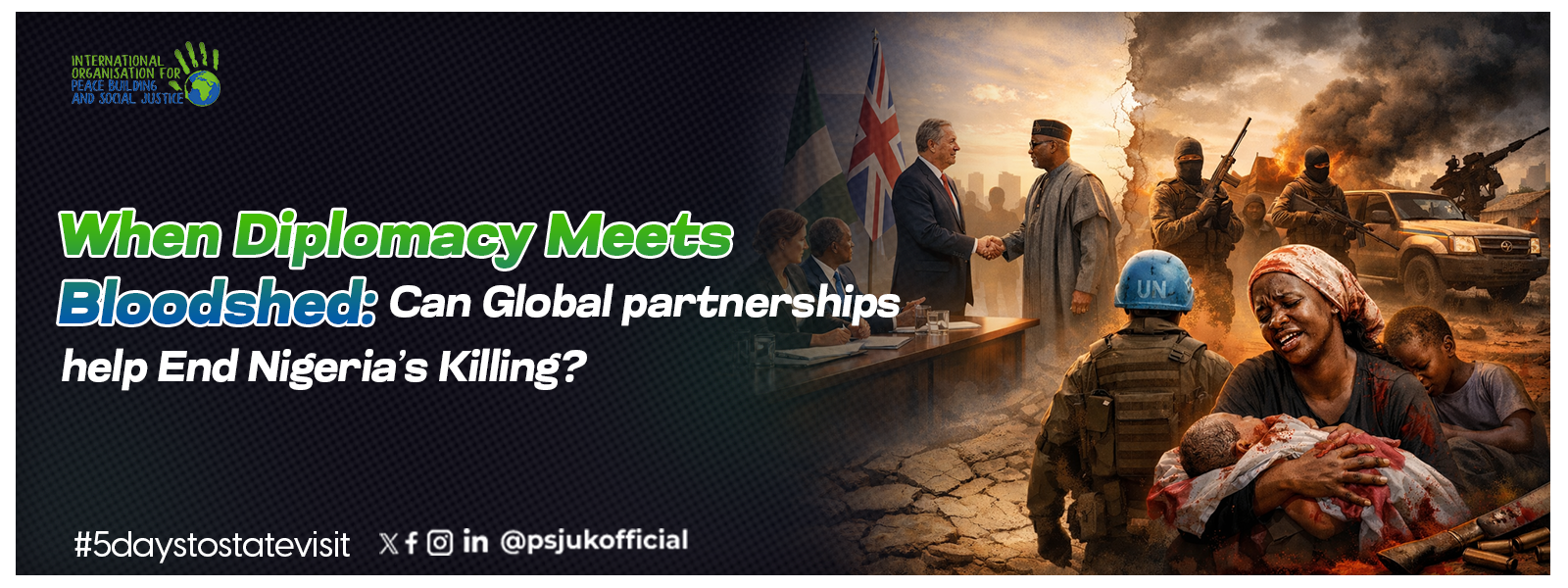
In 2026, Nigeria presents a striking paradox. On one hand, the government of Bola Ahmed Tinubu is rebuilding diplomatic bridges and projecting an image of economic recovery and international relevance. The recent state visit to the United Kingdom, which is the first in nearly four decades, symbolised a renewed effort to reposition Nigeria as a credible partner on the global stage.
Yet beneath the ceremonial handshakes and diplomatic language lies a troubling domestic reality. Across several regions of the country, violence continues to claim lives, displace communities, and weaken public trust in the state’s ability to guarantee security. Nigeria today stands at a crossroads where diplomacy and bloodshed exist side by side.
The critical question, therefore, is simple: can global partnerships truly help Nigeria confront its worsening security crisis?
A Country Facing Many Wars at Once
Nigeria’s security challenge is no longer confined to one region or one group. It has evolved into a patchwork of conflicts stretching across the country.
In the North-West and North-Central regions, kidnapping has become a thriving criminal enterprise. Entire communities live under the shadow of abduction networks that operate with alarming coordination. Families sell property, borrow money, or rely on community fundraising to pay ransom, turning survival into a private negotiation rather than a public guarantee.
In the North-East, the insurgency linked to Boko Haram and its offshoot Islamic State West Africa Province continues to test the resilience of the Nigerian state. Despite years of military campaigns, attacks still occur, reminding citizens that security victories are often fragile.
The South-East presents yet another dimension. Agitations connected to Indigenous People of Biafra have triggered periodic violence and economic disruption, including the controversial “sit-at-home” orders that paralyse businesses and schools.
Taken together, these crises resemble what analysts increasingly describe as a “theatre of insecurity.” Different actors, different motivations, yet one common outcome: ordinary citizens caught in the crossfire.
Why the World Is Paying Attention
Nigeria’s security challenges are not merely domestic concerns. As Africa’s most populous nation and a key economic hub in West Africa, instability within Nigeria carries regional and global consequences.
This reality explains why international partnerships have become central to Nigeria’s security strategy.
China has emerged as a major defence partner, supporting efforts to strengthen local military production and supply chains. Western partners such as the United Kingdom and the United States continue to provide training, intelligence cooperation, and counterterrorism support.
These partnerships are built on the understanding that security today is rarely solved by one country alone. Terrorism networks cross borders, arms flow through regional corridors, and criminal economies thrive on global financial systems.
But cooperation brings its own complications. Western governments often attach conditions related to human rights and governance, while partnerships with other powers focus more heavily on military capability. Balancing these relationships requires both diplomacy and strategic clarity.
The Deeper Roots of Violence
Military cooperation alone cannot solve Nigeria’s security puzzle.
Many of the conflicts erupting across the country are rooted in deeper structural challenges: poverty, weak governance, environmental pressure, and competition for land and water.
The economic impact is severe. Nigeria’s agricultural belt, which is critical for national food security, has been repeatedly disrupted by violence. When farmers cannot safely access their land, the ripple effects reach markets, food prices, and livelihoods nationwide.
When Partnerships Work and When They Don’t
International cooperation can play a powerful role when it strengthens institutions rather than merely supplying weapons.
Training programmes that professionalise security forces, intelligence sharing that prevents attacks, and peacebuilding initiatives that empower community leaders have all shown promise in different contexts.
However, global partnerships risk becoming symbolic if they fail to address governance failures at the heart of insecurity. Equipment and training cannot replace accountability, and diplomatic visits cannot substitute for structural reform.
As the African proverb reminds us, “a roof cannot be repaired during the storm if the foundation is weak.”
Turning Diplomacy Into Peace
For global partnerships to truly help Nigeria overcome its security crisis, they must support a broader vision of human security.
This includes investing in climate resilience, strengthening local peacebuilding networks, improving border security, and tracking the financial flows that sustain criminal networks.
Above all, partnerships must reinforce the idea that sovereignty carries the responsibility to protect citizens and uphold justice.
Nigeria’s renewed diplomatic engagement offers an opportunity to reshape these collaborations into something more meaningful.
Because ultimately, the success of diplomacy should not be measured only in agreements signed or ceremonies attended. Its true measure lies in whether a farmer in Benue, a trader in Kaduna, or a student in Borno can live without fear.
Until that reality is achieved, diplomacy and bloodshed will continue to share the same uneasy stage.
