
Chinecherem James


-
Total Recruits5016 collected! 32.0% of the goal
-
Chinecherem James published Is Nigeria’s Democracy Real If Votes Have a Price Tag? in Articles and op-eds 2026-07-03 17:21:23 +0100
Is Nigeria’s Democracy Real If Votes Have a Price Tag?
On Elections, Money, and the Promise of Peace & Social Justice….
Nigeria is now just 6 months away from what could be its most consequential election, ushering in a new class of democratic leaders who will have the task of eradicating the burgeoning ranks of non-state armed actors who are currently making ‘much progress’ in destroying peace and instilling fear across the citizenry and communities. Can the Nigerian people use the upcoming election and the ballot box to safeguard their own lives? Or will it be election business as usual?
Democracy, at its core, is the idea that power belongs to the people, exercised freely, fairly, and without fear. But what happens when the ballot is no longer an expression of conscience, but a commodity with a price?
In Nigeria, that question is no longer theoretical. It is urgent.
Read more -
Chinecherem James published To Nigeria's Retired Generals: A Nation Bleeding Demands More Than Silence in Articles and op-eds 2026-06-16 14:58:09 +0100
MEMORANDUM
To Nigeria's Retired Generals: A Nation Bleeding Demands More Than Silence
From PSJ UK
To start with, the death of retired Major General Rabe Abubakar in captivity is not merely a personal tragedy, but a national indictment.
PSJ UK extends its deepest condolences to the family, friends, colleagues, and comrades of the late General. From the team across the world, we mourn a man who dedicated a significant part of his life to the defence of Nigeria, only to spend his final days in the custody of armed criminals operating within Nigerian territory.
Read more
-
Chinecherem James published The Children Are Still Missing: How Long Must Oriire Wait? in Articles and op-eds 2026-06-16 14:50:31 +0100
The Children Are Still Missing: How Long Must Oriire Wait?
A Month After the Abduction, the Silence Is now a scorecard of failure….
By PSJ UK
More than a month has now passed since armed bandits invaded schools in Oriire Local Government Area of Oyo State and abducted dozens of students and teachers. Yet many of the victims remain in captivity, hidden somewhere within or around the vast forests linked to the Old Oyo National Park.
For the families, every sunrise is another day of agony. For the victims, every day in captivity means continued exposure to hunger, disease, fear, harsh weather, and the ever-present danger of armed men who have already demonstrated their capacity and inclination for brutality. For Nigeria, however, the question has become far more uncomfortable: what exactly is being done, and why is it taking this long?
Read more
-
Chinecherem James published Why Terrorists and Non-State Actors Are Outpacing Governments in Articles and op-eds 2026-06-15 18:29:48 +0100
Why Terrorists and Non-State Actors Are Outpacing Governments
The Agility Crisis at the Heart of Modern Insecurity
By Anuoluwapo Idowu.
A major concern facing governments around the world today is how groups that operate outside the law have become faster, more adaptable, and in many cases, more effective than the institutions meant to deliver on the most fundamental rights of its people: protection of lives and properties.
From the forests of Nigeria to the regions of the Sahel, insurgent groups, bandits, and terrorist organisations continue to highlight a key weakness in modern governance.
Sadly, the issue is not that these groups have more resources than the state; they do not. The issue is that they have something governments are increasingly struggling to maintain: agility.
Read more
-
Chinecherem James published State Policing in Nigeria: Progress, Prospects and Persistent Barriers in Articles and op-eds 2026-06-15 18:22:16 +0100
State Policing in Nigeria: Progress, Prospects and Persistent Barriers
Who were the first people who supported the idea of state-level policing in Nigeria?
By Anuoluwapo Idowu
These were the guiding questions I asked on this topic. Initially, I was unsure about who the main supporters of state policing in Nigeria were.
However, I later found out that several prominent individuals have long supported this idea. Among them are Chief Obafemi Awolowo, who was the Premier of the Western Region during Nigeria’s First Republic; former Deputy Senate President Ike Ekweremadu; former military head of state Ibrahim Babangida; and many other notable figures who have consistently advocated for state policing in Nigeria.
Read more
-
Chinecherem James published They Came for the Children in Articles and op-eds 2026-06-15 18:14:08 +0100
They Came for the Children
How armed groups are outrunning the Nigerian state, and what communities are paying for that failure
By Nwanneka Miriam Ike
On an ordinary school morning in Oriire Local Government Area, Oyo State, children filed into classrooms; Teachers wrote on boards; just as the day had begun on thousand other school days had begun in those communities; quietly, hopefully, with the small regular rituals of learning.
Then came the gunmen…
On 15 May 2026, armed bandits descended on three schools: Baptist Nursery and Primary School in Yawota, Community Grammar School in Esiele, and LEA Primary School nearby. They abducted over 30 pupils and teachers and disappeared. Disappeared as one would imagine, like in the Chinese movies, with clouds of smoke into the surrounding forests. Among those abducted was Michael Oyedokun, a mathematics teacher. He would not come home. His captors beheaded him.

Twelve days later, a video emerged of the abducted vice principal, Mrs Alamu. In the video, she kneels in a forest clearing and looks directly into the camera. In this video, she greets, "Good morning," and further goes on to say, "Today is the 27th of May 2026. About 13 days ago we were picked from work and we are still in the bush." The sound of her voice is steady, steadier than the state that failed to protect her.
President Tinubu responded on the first of June, seventeen days after the attacks. He approved 1,000 new forest guards for Oyo State and dispatched a special tactical unit. A teacher was already dead. Children remained in the forest. The guards were still being approved.
For those seventeen days, the rain fell, the sun shone, they were made to move from one forest to another. They were beaten by insects, exposed to wild creatures, psychologically wounded, exposed to grave illnesses without food or water and yet beaten and bruised like they were meant to die a second death for the sins of the world. You would think they would have been rescued because the president spoke, but they still remain in captivity.
This is the story of a gap, not a funding gap, because Nigeria allocated a record ₦6.85 trillion to security in 2025, a 39.5 per cent increase over the previous year. It is an agility gap: the widening, lethal distance between how fast threats move and how slowly the state responds. And it is a story that communities across Nigeria have been living with, and dying inside for years.
Read more -
Chinecherem James published Armored Tanks on City Streets, Defenseless Children in the Forest: Nigeria’s Tragic Misplacement of Military Might in Articles and op-eds 2026-06-06 21:58:58 +0100
Armored Tanks on City Streets, Defenseless Children in the Forest: Nigeria’s Tragic Misplacement of Military Might
A look of genuine shock washed over the faces of several Nigerians who recently joined the peaceful protests championed by the Nigerian Union of Teachers (NUT), the Nigeria Labour Congress (NLC), the National Association of Nigerian Students (NANS), and other concerned citizens. In a video currently circulating online, a man exclaimed in sheer disbelief, staring at a massive military armoured tank as though it were an alien spacecraft. In his bewilderment, he voiced a frustration that mirrors the collective exhaustion of the nation: why is an armoured tank parked on a tarred road to monitor a peaceful protest, when it should be tearing through the thick, hostile forests where innocent Nigerians are held captive?
Read more
-
Chinecherem James published The Anatomy of a Crisis: Mixed Signals, Ransom Demands, and the Oyo School Abductions in Articles and op-eds 2026-06-06 21:50:50 +0100
The Anatomy of a Crisis: Mixed Signals, Ransom Demands, and the Oyo School Abductions
I undertook a much-needed analysis, an X-ray observation of every intricate detail surrounding the Oyo school abduction situation, and unearthed a few sobering realities.
Truth, much like a crisis, rarely reveals itself in a single glance.
First, I revisited the initial broadcast made by the governor following his meeting with security chiefs, and one glaring contradiction stands out. According to several media reports, Oyo State Governor Seyi Makinde initially declared that the government was willing to listen to the demands of the abductors who kidnapped pupils, students, and teachers in Oriire Local Government Area to secure their safe release.
Speaking to journalists at his private residence in Kolapo Ishola Estate, Ibadan, regarding the tragic incident in the Ahoro Esinele Community, he sought to reassure the public. He emphasised that while the state would never surrender to terrorism, all efforts were being intensified to ensure the victims returned home unharmed.
Read more
-
Chinecherem James commented on THE CARELESSNESS OF THE Southwest - Prof. Moyo Okediji 2026-06-04 12:12:38 +0100Complacency in the face of rising insecurity is indeed no longer an option. Our safety as a society will come not from waiting, but from deliberate and collective action
-
Chinecherem James published Nigeria’s 30,000-Strong Fulani Militant Crisis: Why Is a US Commission Doing What Abuja Should Be Doing? in Articles and op-eds 2026-06-03 14:44:29 +0100
Nigeria’s 30,000-Strong Fulani Militant Crisis: Why Is a US Commission Doing What Abuja Should Be Doing?
PSJ UK responds to the release of the United States Commission on International Religious Freedom (USCIRF) Issue Update on Fulani militant violence in Nigeria — and asks the hard questions that Abuja must face.
What the USCIRF Report Finds
In May 2026, the United States Commission on International Religious Freedom (USCIRF) — an independent, bipartisan US legislative agency — published a detailed issue update titled Nonstate Violators of Religious Freedom in Nigeria: Fulani Militants. The report provides a sobering and methodical accounting of a crisis that has been escalating for years.
Among its key findings, USCIRF documents that an estimated 30,000 Fulani militants operate across Nigeria — from the northwest, through the Middle Belt and into the South — operating in groups of between 10 and 1,000, with no central command but with periodic coordination. The report notes that violence by these militants caused the highest number of deaths among all religious communities in Nigeria over the past year, surpassing even organised insurgent groups and criminal gangs.
Read more
-
Chinecherem James published Urgent Appeal for the Safe Return of Abducted Students and Teachers in Oyo State in Write to your MP 2026-05-29 18:46:48 +0100
Urgent Appeal for the Safe Return of Abducted Students and Teachers in Oyo State
This is a deeply distressing and urgent public appeal regarding the abduction of students and teachers in Oyo State, Nigeria, who have now spent weeks in captivity.
This situation represents a heartbreaking failure of protection for some of the most vulnerable in society — schoolchildren and educators who should have been safe in their learning environments. The continued silence, delay, and uncertainty surrounding their safe return is unacceptable and deeply painful for families, communities, and Nigerians across the world.
We cannot normalise or accept a reality where children and teachers are taken and remain missing without resolution. Every day that passes deepens the trauma for families and increases public concern over safety and security in our communities.
This is a public call for urgent action, coordinated response, and transparent communication until every abducted person is safely returned.
We stand in solidarity with the affected families.
Bring Our Children Home.
#BringBackOriireChildren -
Chinecherem James published Reactive Assurances, Repeated Losses: Rethinking Nigeria’s Security Response in Articles and op-eds 2026-05-28 16:19:42 +0100
Reactive Assurances, Repeated Losses: Rethinking Nigeria’s Security Response
President Bola Ahmed Tinubu has described the recent killings in Jos and Kaduna as “unacceptable.” That position is shared by many Nigerians. What is increasingly difficult to accept, however, is the widening gap between official condemnation and measurable outcomes. Over time, a pattern has emerged: when violence escalates, the state responds with strong rhetoric, emergency deployments, and high-level directives, yet the cycle of attacks persists with troubling regularity.
Recent incidents in Jos illustrate this concern. Following the killing of at least 28 people, state authorities acknowledged the arrest of an individual accused of inciting violence, but offered limited clarity on the actual perpetrators. Eyewitness accounts, including from youth leaders in areas such as Ugwan Rukuba, suggest that attackers often operate in coordinated formations, arriving in vehicles and on motorcycles, sometimes wearing military-style uniforms without identification. These accounts raise serious questions about the proliferation of arms, impersonation of security forces, and the ability of perpetrators to move with relative freedom across vulnerable communities.
Read more
-
Chinecherem James published THE URGENT NEED FOR VOTERS’ EDUCATION in Articles and op-eds 2026-05-28 15:54:11 +0100
THE URGENT NEED FOR VOTERS’ EDUCATION
In the just-concluded Continuous Voter Registration, 4.4 million Nigerians registered to vote in just four weeks, with the majority being young Nigerians numbering over 2.92 million. Analysts’ reviews suggest the rise is mainly driven by the desire for change. Nigerians have traded apathy and made a decision that can impact not only their future, but that of the next generation.
But as the election approaches, the need to educate voters is even more pressing as worsening economic hardship makes many Nigerians susceptible to manipulation. Sadly, if left unaddressed, this challenge will not only affect young Nigerians, but also older citizens who may opt for immediate survival over hope for a better future. Stories of people selling their votes for a few cups of rice or a tin of tomato paste are not just abstract situations, but realities that could come back to haunt us if voters are not properly educated on the long-term impact of their decisions.
Read more
-
Chinecherem James published We Don’t Need More Condolences But Action: A Stronger Body Language Against Terrorism in Articles and op-eds 2026-05-28 15:36:55 +0100
We Don’t Need More Condolences But Action: A Stronger Body Language Against Terrorism
“Nigerians don’t need any more condolences; they have had enough in the last three years,” former Vice President Atiku Abubakar said recently after the abduction of 39 people in Oyo. Perhaps, he spoke directly from the lips and frustrations of millions of Nigerians who have watched kidnapping, banditry, abduction and terrorism become frighteningly normal without corresponding decisive action.
I recently searched through the presidential State House releases to see how many condolence statements President Bola Ahmed Tinubu has issued to victims of terrorism, kidnapping, banditry and violent attacks since assuming office. The answer was dozens. In context, President Tinubu has publicly empathised with Nigerians more than 24 times in less than three years over violent incidents and insecurity-related tragedies. Condolences have become routine. Statements have become predictable. But perhaps it is now safe to conclude that repeated sympathies alone cannot stop the gruesome murder of Nigerians.
Read more
-
Chinecherem James published Violence unchecked travels faster: the Orire local government abduction in Articles and op-eds 2026-05-20 15:51:10 +0100
Violence unchecked travels faster: the Oriire local government abduction
For years, many people in South-West Nigeria watched the frightening wave of mass abductions in the North with emotional distance. It was terrible, yes, but it often felt far away. Something on the news. Something happening to “other people.” But evil has a dangerous way of travelling when it is tolerated long enough. Today, Oyo State, long regarded as one of the intellectual and relatively peaceful centres of the South-West, has suddenly found itself staring directly into the same nightmare.
The attack on schools in Ahoro-Esinle and Yawota communities in Oriire Local Government Area was not just another security incident. It was a psychological rupture. Armed men stormed schools, killed at least one teacher, abducted about 25 pupils, students and seven staff, and disappeared into the vast forest corridors linking northern Oyo to parts of Kwara State. Reports identified the affected schools as Community Grammar School, L.A. Primary School in Ahoro-Esinle, and Baptist Nursery and Primary School in Yawota.
Read more
-
Chinecherem James published The Price of a Comment: What is the Essence of Life if it Cannot be Lived? in Articles and op-eds 2026-05-12 11:25:19 +0100
The Price of a Comment: What is the Essence of Life if it Cannot be Lived?
What is the essence of life if it cannot be lived? Or more poignantly, why must a young woman die because she made a comment on WhatsApp?
These are the haunting questions that linger in the air as we mark four years since the brutal lynching of Deborah Samuel Yakubu. On May 12, 2022, the sun rose on a young woman with dreams of a career and a future; by sunset, those dreams had been reduced to ashes in a courtyard at the Shehu Shagari College of Education in Sokoto. Her crime? A request in a class WhatsApp group to keep the forum focused on academic work, a comment deemed "blasphemous" by a radicalized mob.
Read more -
Chinecherem James published When Diplomacy Meets Security: What Did the UK–Nigeria State Visit Really Achieve? in Article Section 2026-03-25 17:55:45 +0000
When Diplomacy Meets Security: What Did the UK–Nigeria State Visit Really Achieve?
High Points: UK–Nigeria State Visit (Security Engagements)
- Reaffirmation of Strategic Partnership
- Strengthened bilateral ties between Nigeria and the United Kingdom
- Reinforced Nigeria’s position as a key security and geopolitical partner in Africa.
- Renewed Security Cooperation Frameworks (MoUs)
- Agreements on intelligence sharing and counter-terrorism coordination
- Enhanced collaboration on policing, cybersecurity, and organized crime
- Focus on disrupting arms trafficking and transnational criminal networks.
- Shift Toward Intelligence-Led Security
- Emphasis on data-driven and preemptive security strategies
- Recognition of intelligence gaps in addressing insurgency and banditry
- Integration of Non-Kinetic Security Approaches
- Increased focus on governance, justice, and community resilience
- Acknowledgement that military force alone cannot resolve insecurity
- Promotion of peacebuilding and social cohesion as core security tools
- Migration and Border Security Agreements
- Strengthened cooperation on migration management and border control
- Focus on visa systems, irregular migration, and return processes.
- Emerging concerns around dignity, fairness, and diaspora perception
- Diaspora Engagement as a Policy Lever
- Recognition of Nigerians in the UK as key stakeholders in policy and advocacy
- Diaspora contributions framed as bridges between diplomacy and lived realities
- Pre-Visit and Side Engagements
- Policy dialogues and parliamentary discussions shaping the agenda
- Civil society and advocacy groups highlighting security concerns
- Framing the visit as a response to Nigeria’s multi-layered crisis
- Reality Check: Ongoing Insecurity in Nigeria
- Continued attacks in the North-East, North-West, and Middle Belt
- Highlighted gap between diplomatic commitments and on-the-ground realities
- Implementation Gap Identified
- Concern that existing frameworks are not translating into civilian protection
- Need for measurable outcomes: safety, accountability, and trust
- Call for Outcome-Based Diplomacy
- Emphasis on moving from agreements to impact
- Prioritization of people-centered security over institutional optics
-
Chinecherem James published Peace Building & Social Justice: Nigeria’s Path to Prosperity in State Visit 2026-03-23 15:21:03 +0000
Peace Building & Social Justice: Nigeria’s Path to Prosperity
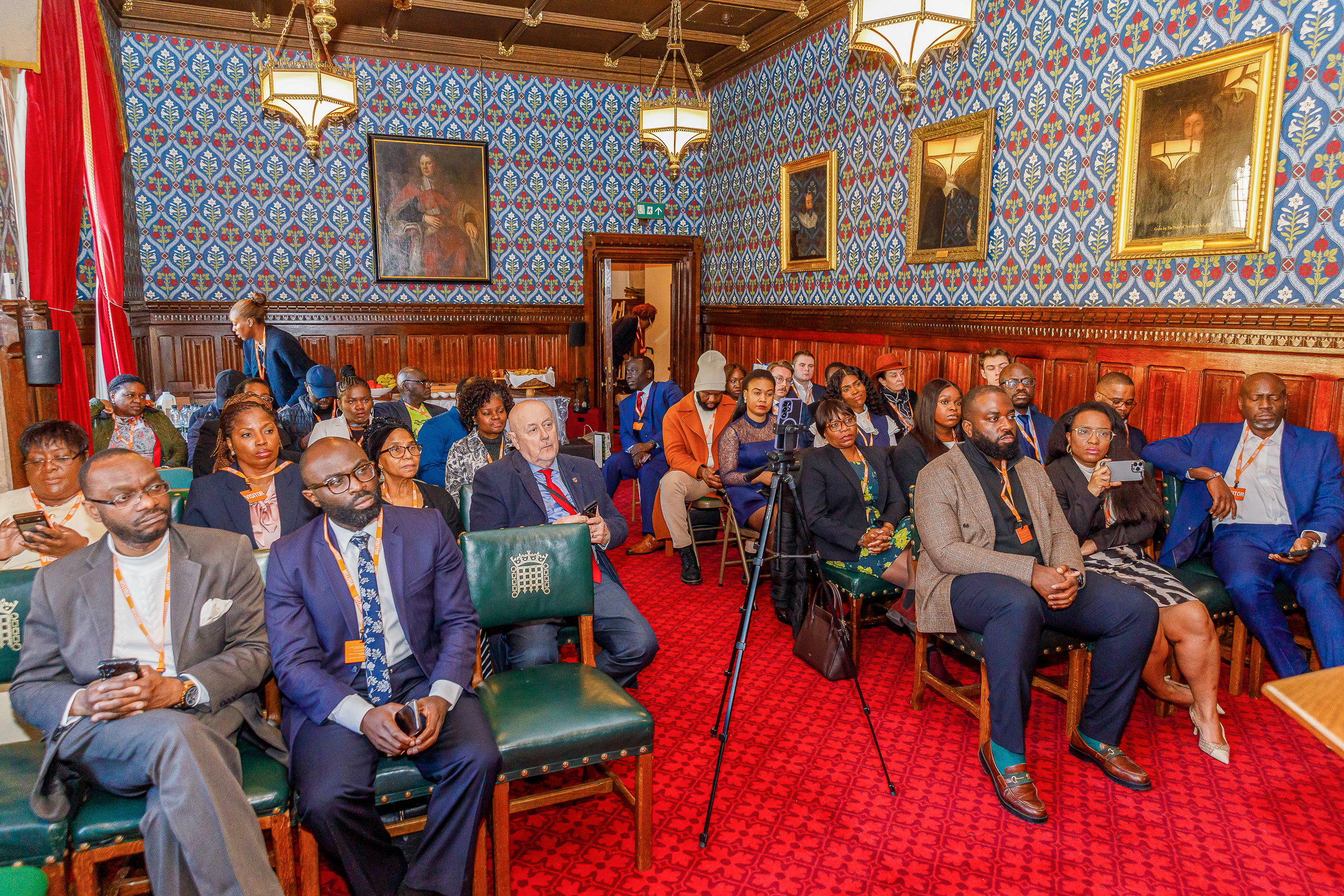
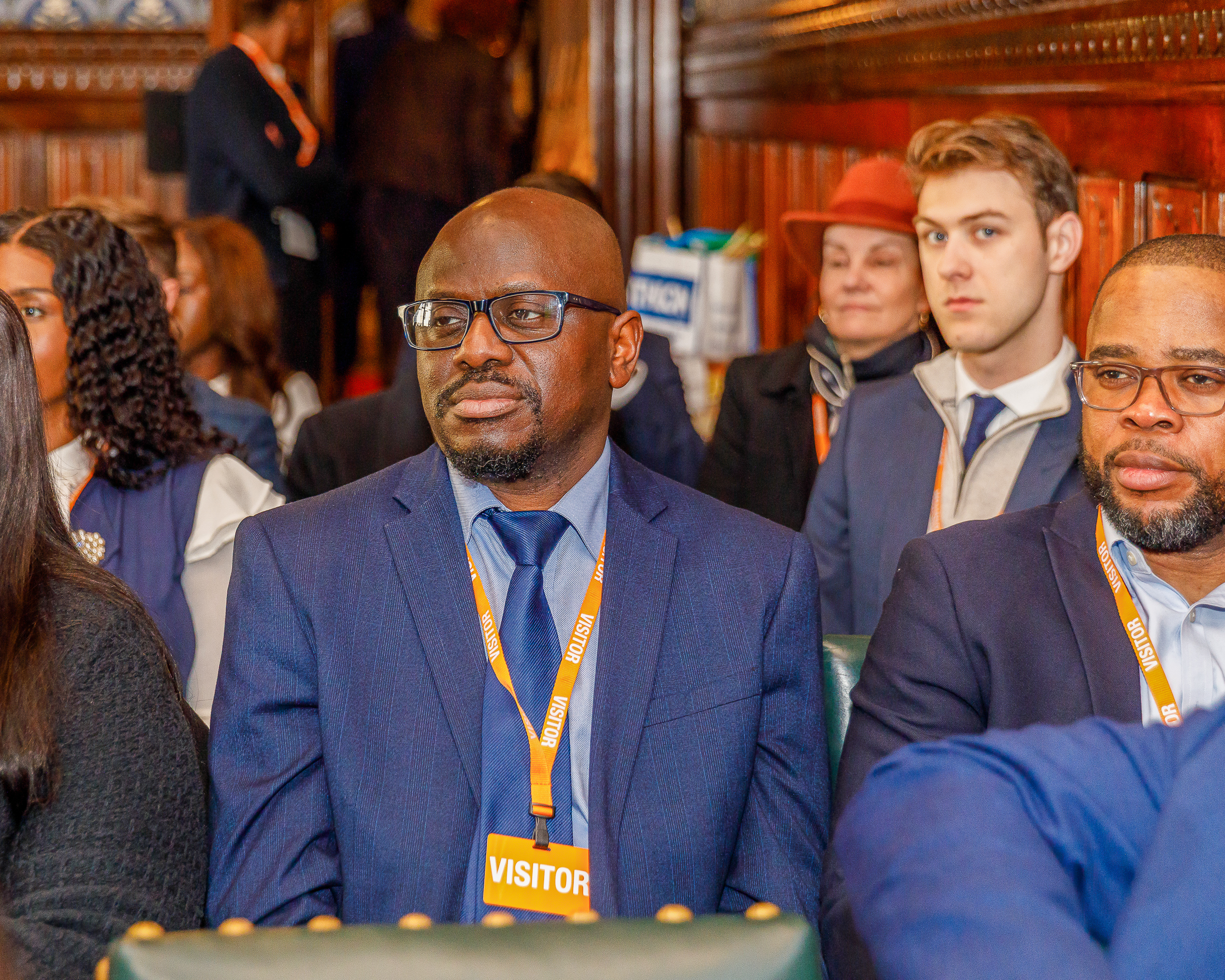
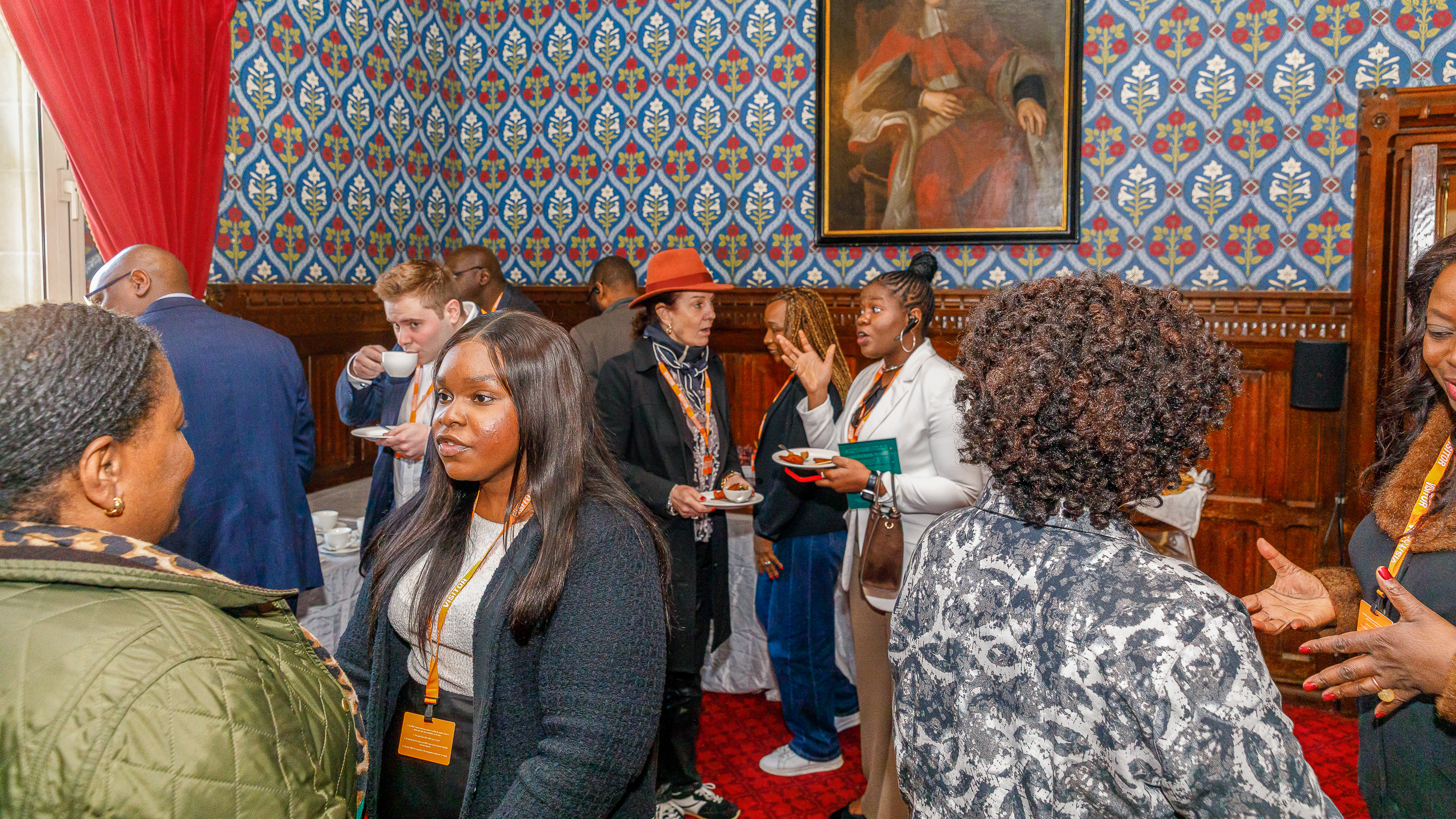
Breakfast Policy Dialogue | UK Parliament | 19 March 2026
As part of the UK–Nigeria State Visit engagements, PSJ UK convened a high-level breakfast policy dialogue at the UK Parliament, bringing together policymakers, civil society leaders, and members of the Nigerian diaspora.
The session provided a timely platform to reflect on Nigeria’s current realities and to explore practical pathways towards peace, stability, and inclusive development. At a time when bilateral discussions were underway at the highest levels, the dialogue ensured that the perspectives and concerns of communities remained central to the conversation.

Key Themes and Discussions
1. Security and Protection of Communities
Participants highlighted the scale and urgency of insecurity affecting various regions in Nigeria, including ongoing violence, displacement, and threats to civilian life. The need for strengthened protection mechanisms and coordinated responses was emphasised.2. Governance, Accountability and Trust
Discussions underscored the importance of transparent governance, accountability, and the rule of law as critical foundations for long-term stability and public confidence.3. The Role of Advocacy and Diaspora Engagement
The session reinforced the importance of advocacy in ensuring that lived realities inform high-level decision-making. The Nigerian diaspora was recognised as a vital bridge in shaping policy conversations and sustaining engagement.4. UK–Nigeria Cooperation
Participants explored opportunities for deeper collaboration between the UK and Nigeria, particularly in areas relating to security, institutional strengthening, and humanitarian support.Outcomes and Reflections
The dialogue created space for meaningful exchange, bringing diverse perspectives into a shared conversation focused on solutions. It reinforced the need for:
-
Continued engagement beyond the State Visit
-
Stronger alignment between policy discussions and on-the-ground realities
-
Coordinated advocacy efforts to drive accountability and action
There was a shared recognition that moments such as the State Visit must translate into tangible outcomes that improve the lives of communities affected by insecurity and instability.
Next Steps
PSJ UK will continue to build on the momentum from this dialogue by:
-
Engaging stakeholders across government, parliament, and civil society
-
Sharing policy insights and recommendations from the session
-
Strengthening advocacy efforts to ensure sustained attention on key issues
-
Expanding platforms for collaboration and dialogue
Stay Engaged
This dialogue is part of an ongoing effort to ensure that the voices of affected communities are heard and that meaningful action follows.
We invite you to:
-
Explore our policy papers and resources
-
Join our advocacy efforts
-
Stay connected for future engagements
Together, we can continue to work towards a more peaceful, just, and prosperous Nigeria.
-
-